
Podcast Index
Most episodes span more than one field of study and are therefore listed under multiple headings.
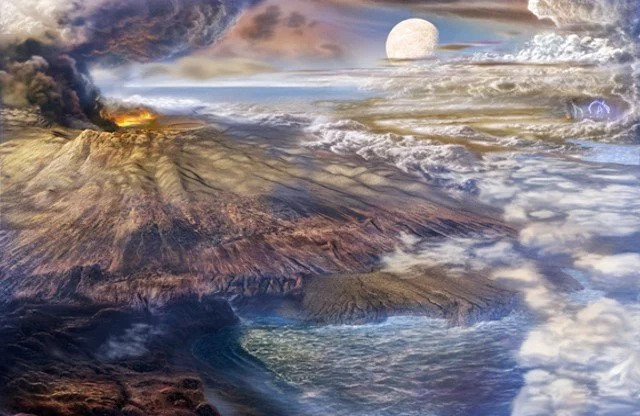
The Early Earth
How the Earth formed and what it was like in its earliest history. These episodes cover Hadean zircons, the origin of the Moon, the oceans and the continents, when plate tectonics began, and the first signs of life.
John Valley on the Early Earth
Sara Russell on What the Asteroids Tell Us About the Earth
David Evans on Supercontinents
Sarah Stewart on a New Scenario for How the Moon Formed
Claude Jaupart on Whether the Earth is Cooling Down
Peter Cawood on When Plate Tectonics Started
Rick Carlson on Probing the Early Solar System
Bob Hazen on the Evolution of Minerals
Martin Gibling on Rivers in the Geological Record - Part 1
Nadja Drabon on a New Lens into the Hadean Eon
Sujoy Mukhopadhyay on Probing the Hadean World with Noble Gases
Martin Van Kranendonk on the Earliest Life on Earth
Clark Johnson on the Banded Iron Formations
Roberta Rudnick on the Continental Crustal Composition Paradox
Lindy Elkins-Tanton on the Origin of Earth’s Water
Renée Tamblyn on the Origin of Continents

Geochemistry
What the chemical and isotopic makeup of rocks, minerals and gases reveals about the Earth. Topics include the varied composition of the mantle, noble gases from the Hadean, banded iron formations, weathering as a climate thermostat, and carbon removal.
Ed Marshall on Iceland’s 2021 Eruption
Matt Jackson on the Inhomogeneity of the Mantle
Phil Renforth on Carbon Sequestration
Brian Upton on the Unique Rift Zone of South Greenland
John Cottle on the Petrochronology Revolution
Nadja Drabon on a New Lens into the Hadean Eon
Dan Rothman on Thresholds of Catastrophe in the Earth System
Sujoy Mukhopadhyay on Probing the Hadean World with Noble Gases
Clark Johnson on the Banded Iron Formations
Susan Brantley on Earth’s Geological Thermostat
Roberta Rudnick on the Continental Crustal Composition Paradox

Geochronology
How geologists date rocks and the events they record, from uranium-lead dating of zircon and calcite to thermochronology and the trilobites once used to tell geological time. Episodes also cover how the time scale itself is divided, including the debate over the Anthropocene.
John Valley on the Early Earth
Ulf Linnemann on the Assembly of Central Europe in the Paleozoic
Becky Flowers on Deciphering the Thermal History of Rocks
Richard Fortey on the Trilobite Chronometer
Phil Gibbard on the Anthropocene
John Cottle on the Petrochronology Revolution
Sujoy Mukhopadhyay on Probing the Hadean World with Noble Gases

Geomorphology
How landscapes, rivers, dunes and sedimentary basins form and change over time. Episodes range from megafloods and turbidity currents to the elevation history of mountain belts and what the sedimentary record leaves out.
Bob Anderson on How Geology Affects Landscape
Craig Jones on the Iconic Landscapes of the American Westerns
Becky Flowers on Deciphering the Thermal History of Rocks
Carmie Garzione on Reconstructing Land Elevation Over Geological Time
Neil Davies on the Greening of the Continents
Martin Gibling on Rivers in the Geological Record
Bruce Levell on Bias in the Sedimentary Record
Rob Butler on the Origin of the Alps
Susan Brantley on Earth’s Geological Thermostat

Geophysics, Mantle, and Core
What seismic waves, gravity, magnetism and laboratory experiments tell us about the Earth’s interior. Topics include seismic tomography, mantle plumes and hotspots, the core and the magnetic field, the strength of tectonic plates, and recent major earthquakes.
Dan McKenzie on What Venus Tells us About the Earth
Steve Sparks on What Makes a Volcano Erupt
Barbara Romanowicz on Seeing Deep Into the Earth
David Sandwell on Seeing Plate Tectonics Under the Oceans
Bruce Buffett on Probing the Earth’s Core
Laurent Jolivet on the Origin of the Mediterranean
Cathy Constable on Mapping the Earth’s Magnetic Field in Time and Space
Carolina Lithgow-Bertelloni on Dynamic Topography
Allen McNamara on the Deep Mantle Structure of the Earth
Gillian Foulger on Explaining Intra-Plate Volcanism Without Mantle Plumes
Peter Molnar on Why the Tibetan Plateau is So High
Claude Jaupart on Whether the Earth is Cooling Down
Harriet Lau on the Motions of the Earth on Timescales of Hours to Millennia
Douwe van Hinsbergen on What Drives the Motions of the Tectonic Plates
Ana Ferreira on Seeing Flows in the Mantle
Tony Watts on Seamounts and the Strength of the Lithosphere
Geoff Abers on Subduction Zones and the Geological Water Cycle
Romain Jolivet on the 2023 Turkey-Syria Earthquakes
Patrick Fulton on the 2011 Tōhoku Earthquake
David Kohlstedt on Simulating the Mantle in the Lab
Bob White on How Magma Moves Through the Crust
Rufus Catchings on Pinning Down California’s Faults
Joe MacGregor on Mapping the Geology of Greenland Below the Ice
Andreas Fichtner on the Frontiers of Seismic Imaging
Claudio Faccenna on the Dynamics of Subduction Zones

Mineralogy
How minerals and gemstones form and evolve, and where the metals we depend on become concentrated. Episodes cover diamonds from the deep mantle, battery metals, salt, and how minerals behave at extreme pressures.
Laurence Robb on the Origin of Mineral Resources
Lee Groat on How Gemstones Form
Bob Hazen on the Evolution of Minerals
Brian Upton on the Unique Rift Zone of South Greenland

Paleontology
What fossils reveal about the history of life, from the earliest microbial communities and the Cambrian explosion to mass extinctions and the dinosaurs that survived the asteroid. Episodes also cover ancient climates, the first reefs, and how we can tell the colors of extinct animals.
John Marshall on the Riddle of the Mass Extinction 360 Million Years Ago
Bärbel Hönisch on Reconstructing Climate in the Distant Past
Rachel Wood on the Emergence of Complex Life in the Precambrian
Mike Howe on the UK National Geological Repository
Steve D’Hondt on Reviving a 100 Million-Year-Old Bacterial Colony
Richard Fortey on the Trilobite Chronometer
Susannah Porter on Tiny Vampires in Ancient Seas
Neil Davies on the Greening of the Continents
Maria McNamara on Seeing the Ancient World in Color
Martin Van Kranendonk on the Earliest Life on Earth
Paul Smith on the Cambrian Explosion
Shanan Peters on Quantifying the Global Sedimentary Rock Record
Isabel Montañez on Using the Late Paleozoic Ice Age as an Analog for Present Day Climate
Carina Hoorn on the Evolution of the Amazon Basin

Petrology
How igneous and metamorphic rocks form and what they record about conditions deep in the Earth. Topics include ophiolites, mantle rocks and diamonds, petrochronology, and the pressures and temperatures rocks have been through.
Clare Warren on Divining the History of a Rock
Lee Groat on How Gemstones Form
Paul Hoffman on the Snowball Earth Hypothesis
Matt Jackson on the Inhomogeneity of the Mantle
David Bercovici on How Plate Subduction Starts
Roger Bilham on Himalayan Earthquakes
Brian Upton on the Unique Rift Zone of South Greenland
John Cottle on the Petrochronology Revolution
David Kohlstedt on Simulating the Mantle in the Lab

Planetary Science
Geology beyond the Earth: the Moon, Mars, Venus, Io, asteroids and exoplanets. Many episodes feature scientists leading space missions such as Perseverance, Lucy, Psyche, Juno and VERITAS.
Dan McKenzie on What Venus Tells Us About the Earth
Sara Russell on What Asteroids Tell Us About the Earth
Harold C. Connolly, Jr. on Bringing an Asteroid Sample Back to the Earth
David Rothery on Volcanism in the Solar System
Tomo Usui on the Mission to the Martian Moon Phobos
Sarah Stewart on a New Scenario for How the Moon Formed
Katie Stack on Geological Mapping of Mars with Perseverance Rover
Rick Carlson on Probing the Early Solar System
Sue Smrekar on the VERITAS Mission to Venus
Ben Weiss on the Mission to Psyche
Mahesh Anand on What Human Return to the Moon Means for Lunar Geology
Scott Bolton on the Most Volcanically Active Body in the Solar System
Sara Seager on Exoplanet Geology
Lindy Elkins-Tanton on the Origin of Earth’s Water
Anat Shahar on What Makes a Planet Habitable
Hal Levison on the Mission to Jupiter’s Trojan Asteroids

Tectonics and Structural Geology
How plate tectonics builds mountains, opens oceans and splits continents apart. Episodes cover subduction, supercontinents, the Himalaya, the Alps and the Appalachians, and when plate tectonics began. Others explore ophiolites, mid-ocean ridges and hotspots, salt tectonics, the stretching of the Basin and Range, the Tibetan Plateau and the Mediterranean, and how continental crust can be dragged 100 kilometers down and brought back to the surface.
Mike Searle on Why Mountains Exist
David Sandwell on Seeing Plate Tectonics Under the Oceans
Laurent Jolivet on the Origin of the Mediterranean
David Evans on Supercontinents
Dietmar Müller on Reconstructing a Billion Years of Earth History
Gillian Foulger on Explaining Intra-Plate Volcanism Without Mantle Plumes
Peter Molnar on Why the Tibetan Plateau is So High
Craig Jones on the Iconic Landscapes of the American Westerns
Mathilde Cannat on Mid-Ocean Ridges
Douwe van Hinsbergen on What Drives the Motions of Tectonic Plates
Ulf Linnemann on the Assembly of Central Europe in the Paleozoic
Peter Cawood on When Plate Tectonics Started
Chuck DeMets on High-Resolution Plate Motions
Carmie Garzione on Reconstructing Land Elevation Over Geological Time
David Bercovici on How Plate Subduction Starts
Ana Ferreira on Seeing Flows in the Mantle
Tony Watts on Seamounts and the Strength of the Lithosphere
Geoff Abers on Subduction Zones and the Geological Water Cycle
Patrick Fulton on the 2011 Tōhoku Earthquake
John Wakabayashi on the Franciscan Complex
Rob Butler on the Origin of the Alps
David Kohlstedt on Simulating the Mantle in the Lab
Damian Nance on What Drives the Supercontinent Cycle
Richard Ernst on Large Igneous Provinces
Alex Copley on Soft Continents
Roberta Rudnick on the Continental Crustal Composition Paradox
Evan Smith on Diamonds from the Deep Mantle
Rob Strachan on the Caledonian Orogeny
Mike Searle on the Mountain Ranges of Central Asia
Folarin Kolawole on Continental Rifting
Cees Van Staal on the Origin of the Appalachians
Claudio Faccenna on the Dynamics of Subduction Zones
Jiří Žák on the Orogenies that Shaped Central Europe
Keith Klepeis on How Plutons Form
Alec Brenner on When Tectonic Plates First Moved
Bernhard Steinberger on Whether Hotspots Are Fixed
Brian Wernicke on Lithospheric Extension and the Basin and Range Province

Social and Industrial Aspects of Geology
Where geology meets everyday life: earthquake hazards, mineral and energy resources, climate change, carbon storage and nuclear waste disposal. Other episodes explore the geology of cities, the experience of rock climbing, and how geological time is divided.
James Jackson on the Fatal Attraction Between Cities and Earthquakes
Laurence Robb on the Origin of Mineral Resources
Sir Mark Moody-Stuart on Transitioning to a Post-Carbon Economy
Lee Groat on How Gemstones Form
Mike Howe on the UK National Geological Repository
Kathryn Goodenough on the Sources of Lithium for a Post-Carbon Economy
Phil Gibbard on the Anthropocene
Roger Bilham on Himalayan Earthquakes
Phil Renforth on Carbon Sequestration
Brian Upton on the Unique Rift Zone of South Greenland
Anna Fleming on the Experience of Rock Climbing
Martin Gibling on Rivers in the Geological Record
Dan Rothman on Thresholds of Catastrophe in the Earth System
Romain Jolivet on the 2023 Turkey-Syria Earthquakes
Patrick Fulton on the 2011 Tōhoku Earthquake
Susan Brantley on Earth’s Geological Thermostat
Claire Corkhill on Geological Radioactive Waste Disposal
Rufus Catchings on Pinning Down California’s Faults
Isabel Montañez on Using the Late Paleozoic Ice Age as an Analog for Present Day Climate
Joeri Witteveen on Golden Spikes
Tom Herring on High-Precision Geodesy

Volcanology
What makes volcanoes erupt, from how magma is stored to volcanic gas and explosive eruptions driven by water. Episodes also cover Iceland’s recent eruptions, volcanism without mantle plumes, and volcanoes elsewhere in the Solar System.
Steve Sparks on What Makes a Volcano Erupt
David Rothery on Volcanism in the Solar System
Gillian Foulger on Explaining Intraplate Volcanism Without Mantle Plumes
Ed Marshall on Iceland’s 2021 Eruption
Bob White on How Magma Moves Through the Crust
Scott Bolton on the Most Volcanically Active Body in the Solar System